Skip to content
DrugSense Blog

  • Home
  • Drug Facts
  • Drug Truth
  • DrugSense
  • Media Awareness Project
  • Home
  • Drug Facts
  • Drug Truth
  • DrugSense
  • Media Awareness Project
  • Cannabis Attitudes
    Drug Policy

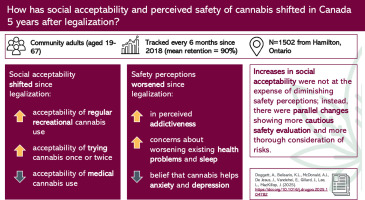
    Changes in cannabis attitudes and perceptions in the five years following recreational legalization in Canada

    Highlights

    •Those not using cannabis pre-legalization showed steeper increases in acceptability.

    •Social acceptability of recreational cannabis use has increased since legalization.

    •Social acceptability of medical cannabis use declined.

    •Regular cannabis use perceived as riskier and more addictive.

    •Declines in perceived health-related benefits; increases in health-related risks.

    Read more in the International Journal of Drug Policy
    Continue Reading
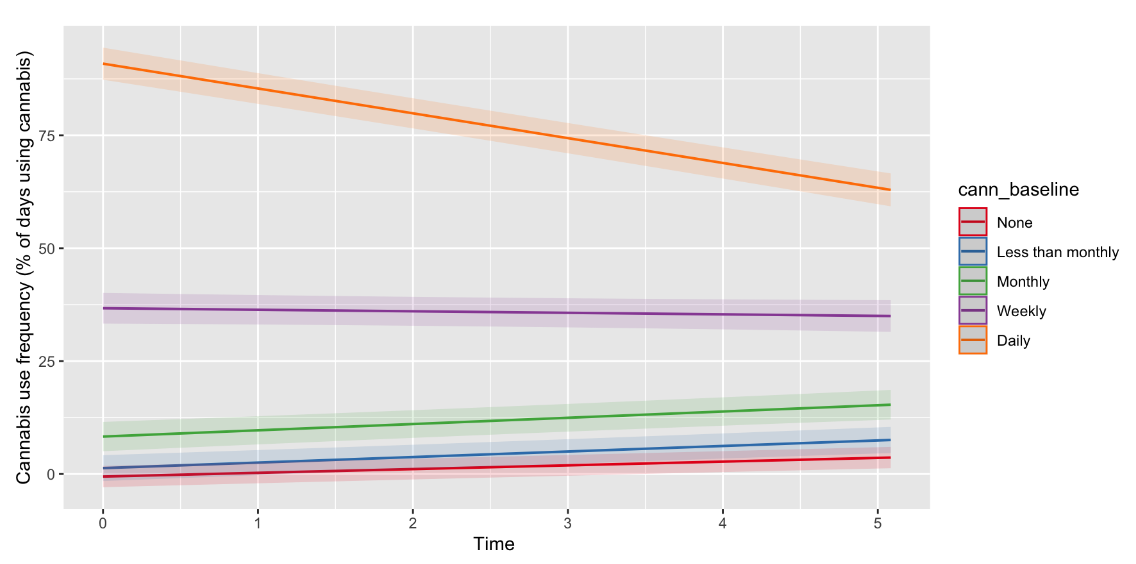
  • Interaction plots for all significant interactions for cannabis use frequency and CUDIT-R score over 5 years since legalization from September 2018 to October 2023 (10 waves)
    Drug Policy

    Cannabis Use and Misuse Following Recreational Cannabis Legalization

    Key Points

    Question  Did cannabis use or misuse change among adults in the 5 years following recreational cannabis legalization in Canada (overall and by prelegalization cannabis use frequency)?

    Findings  In this cohort study including 1428 adults, cannabis use frequency increased significantly overall while misuse decreased, with small effect sizes for both. Prelegalization cannabis use significantly moderated these changes.

    Meaning  From a public health standpoint, this cohort study found modest changes (both negative and positive) in cannabis use behaviors in the 5 years following legalization in Canada.

    Read more: JAMA Network Open

    Continue Reading
  • Dug Law Enforcement
    Drug Policy

    The impact of drug-related law enforcement activity on serious violence and homicide

    Overall, the available evidence suggests that drug-related law enforcement activities are of limited effectiveness in reducing violence. More studies demonstrated an association between drug-related law enforcement activities and increased violence than decreased violence. Selective enforcement tactics appeared the most promising in their capacity to reduce violence, although the evidence base covered in this review is limited.

    Passive drug-related law enforcement activities, such as increasing police presence in known drug-market areas, appear promising in reducing violence. However, less evidence is available on the effectiveness of these interventions than on active law enforcement activities.

    Read more at RAND

    Continue Reading
  • Pierre Poilievre
    Drug Policy

    Editorial: No room for misinformation on drug policy

    Even as the Conservative Party of Canada falls further behind in public opinion polls, its leader is intent on using Trump-like tactics of misinformation and fearmongering to disparage Canada’s illicit drug policies.

    That is neither a winning campaign strategy, nor a healthy and productive message to send to Canadians.

    Read more at the Winnipeg Free Press

    Continue Reading
  • Drug Policy

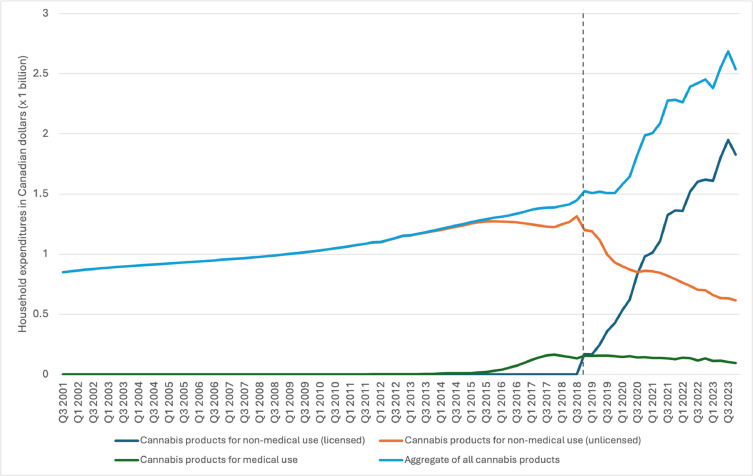
    Association of recreational cannabis legalization with changes in medical, illegal, and total cannabis expenditures in Canada

    • Recreational cannabis legalization (RCL) appears to be displacing the illegal cannabis market
    • Many medical users appear to be transitioning to the recreational market
    • The overall cannabis market in Canada increased considerably in size in 5 years post-RCL

    Read more in the International Journal of Drug Policy

    Continue Reading
  • Cannabis in Canada
    Drug Policy

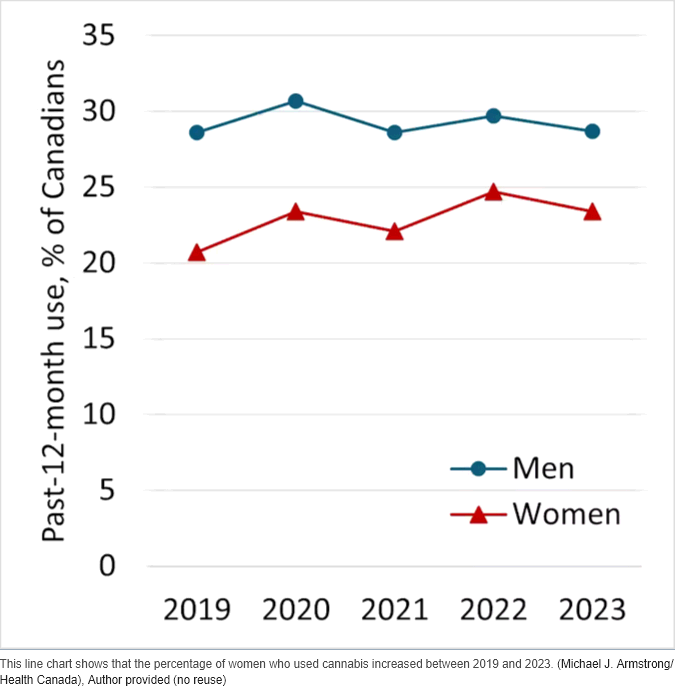
    Cannabis retail expansion in Canada came with only a small uptick in the number of consumers

    Did Canadians consume cannabis more widely, more frequently and at younger ages as it became more accessible and affordable? The answer was mostly no.

    Read more at The Conversion

    Continue Reading
  • Youth Cannabis
    Drug Policy

    BC survey shows fewer young people using cannabis after legalization


    A new report says young people in BC who have tried cannabis were at the lowest rate in 25 years in 2023, with youth less likely to consume cannabis five years into cannabis legalization. However, those who do report using cannabis appear to be using it more often. 

    The Blunt Talk report is the third of its kind to look at cannabis use among youth in British Columbia, drawing upon data from the BC Adolescent Health Survey. That survey is conducted every five years, with the most recent previous data coming from 2018.

    Read more at Stratcann

    Continue Reading
  • Drug Policy

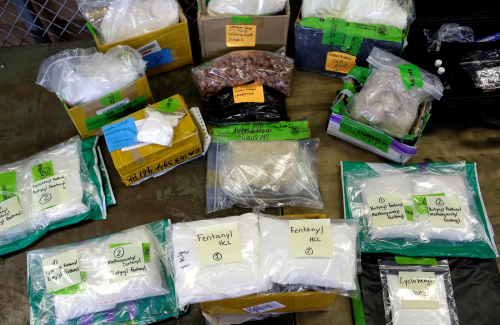
    The fentanyl epidemic in North America and the global reach of synthetic opioids

    Join the Brookings Institution’s Foreign Policy program for an event to launch the results of a year-long project on synthetic opioids in the United States and abroad. Highlighting the project’s findings and featuring top experts, the event will open with a fireside chat between former New York City Mayor Bill de Blasio and Senior Fellow Vanda Felbab-Brown. Subsequent panels will explore U.S. drugs markets, domestic law enforcement, treatment, harm reduction, and decriminalization policies as well as the international dimensions of synthetic opioids and their spread beyond North America.


    Continue Reading
  • Drug Policy

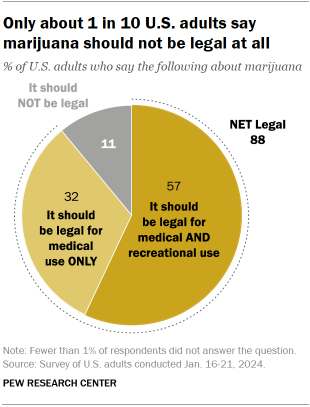
    Most Americans Favor Legalizing Marijuana

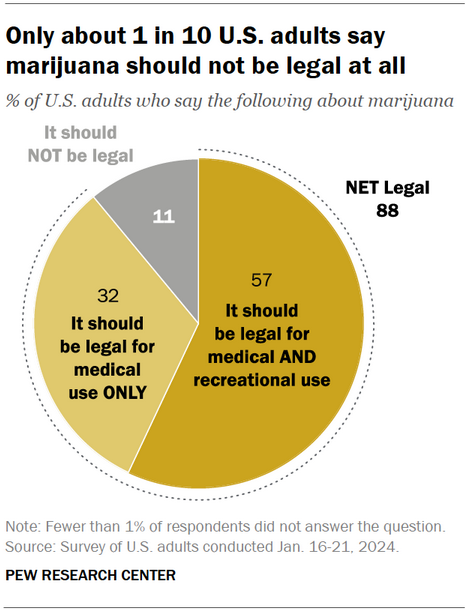
    As more states pass laws legalizing marijuana for recreational use, Americans continue to favor legalization of both medical and recreational use of the drug.

    Pie chart shows Only about 1 in 10 U.S. adults say marijuana should not be legal at all

    An overwhelming share of U.S. adults (88%) say marijuana should be legal for medical or recreational use.

    Nearly six-in-ten Americans (57%) say that marijuana should be legal for medical and recreational purposes, while roughly a third (32%) say that marijuana should be legal for medical use only.

    Just 11% of Americans say that the drug should not be legal at all.

    Read the PEW Survey

    Continue Reading
 Older Posts
Newer Posts 
Drug Policy Facts
Cultural Baggage Radio Show
Media Awareness Project
Graceful Theme by Optima Themes