It’s one of those questions people either dismiss instantly or lean into with curiosity. Legalize everything? Sounds chaotic at first glance. But if you sit with it for a minute, the question becomes less about shock value and more about systems.
Because drugs are already everywhere. The real question is: what changes if control shifts from the shadows into the open?
A Market That Stops Hiding
Right now, illegal drugs operate in a space where quality is unpredictable and accountability is nonexistent. You don’t complain to customer service if something goes wrong. You just deal with the consequences.
Legalization flips that dynamic.
Instead of back-alley transactions, you get regulated supply chains. Products are tested. Dosages are consistent. The quiet but deadly risk of contamination drops. That alone could reshape overdose statistics in a meaningful way.
It also changes who profits.
The money that currently fuels criminal networks doesn’t disappear overnight, but it loses its strongest advantage: exclusivity. When legal avenues exist, black markets tend to shrink. Not vanish, but shrink enough to matter.
The Crime Question Everyone Asks
Would crime go up or down? It depends on what kind of crime you’re talking about.
Drug-related crime, especially the kind tied to distribution and territory, would likely fall. There’s no reason to fight over corners if the product can be sold legally. That tension dissolves.
But human behavior doesn’t magically improve. Some forms of crime linked to addiction would still exist. The difference is that access becomes less desperate. If substances are cheaper and safer, the need to fund them through risky behavior could ease.
That’s not a cure. It’s a shift in pressure.
Public Health Gets a Different Seat at the Table
Legalization pulls drug use out of a moral framework and places it into a health framework. That matters more than it sounds.
When people aren’t afraid of legal consequences, they’re more likely to seek help. Rehab stops feeling like punishment. It becomes a choice, which is messy, but real.
There’s also a strange side effect. When something becomes legal, it often loses its edge. The rebellion fades. Think about alcohol after prohibition. The danger didn’t disappear, but the cultural intensity softened.
Where the Debate Gets Complicated
There’s no version of this scenario where everything works perfectly. That’s worth saying out loud. Legalization doesn’t eliminate addiction. It doesn’t guarantee responsible use. It doesn’t fix every social issue tied to drugs. Anyone promising that is oversimplifying.
What it does offer is a different set of trade-offs. More control over quality. Less strain on law enforcement. A chance to redirect resources toward treatment instead of punishment.
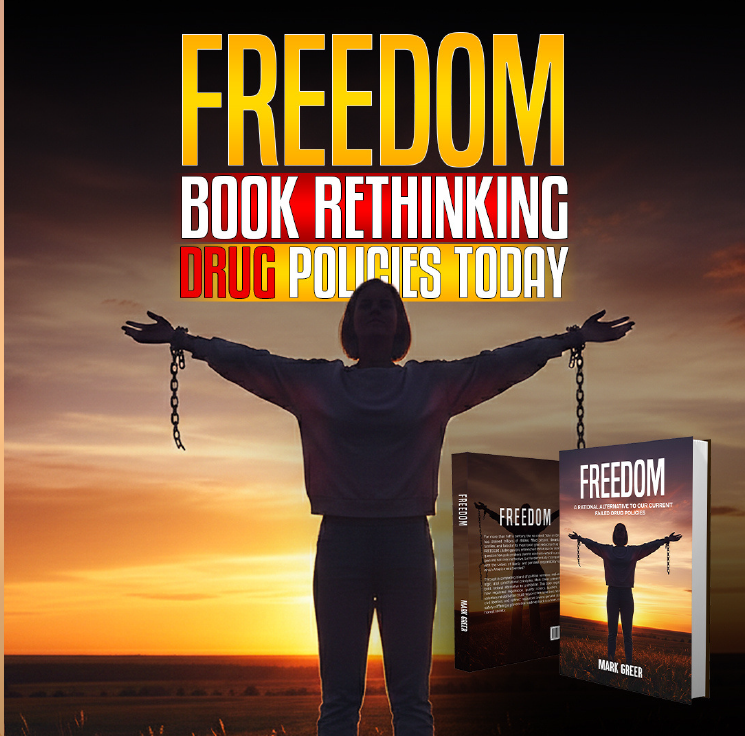
Some policy thinkers have explored this through storytelling, imagining entire systems rebuilt around regulated access and personal responsibility. Those narratives aren’t predictions. They’re tools. Ways to test ideas without real-world fallout.
And maybe that’s the real value of this question. Not whether full legalization is perfect. But whether the current approach is worth holding onto without questioning it.
Is Addiction a Crime or a Health Issue? Rethinking How We Treat Drug Use
There’s a moment, usually quiet, where the labels we use start to feel off.
Addict. Criminal. Patient.
They don’t mean the same thing, but they often get applied to the same person. So which one is it?
When the Law Steps in First
For decades, addiction has been handled through the legal system more than the healthcare system. Arrests, charges, prison time. The assumption behind it is simple. If you punish the behavior, you reduce it.
Except it hasn’t worked that cleanly. People cycle in and out of jail. The underlying dependency doesn’t disappear. In some cases, it deepens. You’re not treating the cause. You’re reacting to the symptoms.
That’s where the discomfort begins. Because addiction doesn’t behave like a typical crime.
The Biology We Don’t Talk About Enough
Addiction changes the brain. Not metaphorically. Literally. Decision-making gets distorted. Reward systems shift. What looks like a choice from the outside often feels like compulsion from the inside.
That doesn’t remove responsibility entirely. But it complicates it. If someone is operating under a hijacked reward system, is punishment the most effective response? Or just the most immediate one?
What Happens When You Shift the Lens
Treat addiction as a health issue, and the response changes almost overnight. You start asking different questions.
What support systems are missing?
Why do people relapse?
How do you make recovery accessible instead of intimidating?
Rehab becomes central, not secondary. Harm reduction strategies enter the conversation. You stop expecting an overnight transformation and start planning for long-term change.
It’s slower. Less satisfying in a headline. But arguably more realistic.
The Human Side of It
One thing that often gets lost in policy debates is the individual story. People dealing with addiction are not abstract problems. They’re parents, siblings, coworkers. Some hold jobs. Some don’t. Some want to quit. Some aren’t there yet.
A strictly criminal approach flattens all of that into one category. It removes nuance.
There’s a growing body of thought, including narrative-driven explorations in recent policy fiction, that tries to reintroduce that nuance. By following individuals through different systems, you start to see how outcomes change based on how they’re treated.
Not perfectly. But noticeably.
So Where Do We Land?
It’s tempting to pick one side. Crime or health. Black or white. Reality doesn’t cooperate.
Addiction intersects with both systems. There are moments where legal boundaries matter. And others where medical support is the only thing that makes sense.
The real shift isn’t choosing one over the other. It’s deciding which one leads. Right now, punishment often comes first. Treatment follows, if at all.
Flip that order, and you might not solve everything. But you change the trajectory. And for a lot of people, that’s the difference between cycling through the system and actually getting out of it.
How Drug Laws Shape Society: The Hidden Costs You Don’t See
Most people think about drug laws in simple terms. Legal or illegal. Right or wrong.
What doesn’t get enough attention is everything happening around those laws. The ripple effects. The quiet costs that don’t show up in headlines.
They’re there. You just have to look sideways.
The System Gets Heavier
Enforcing drug laws takes resources. A lot of them. Police time. Courtrooms. Public defenders. Prisons. It’s an entire ecosystem built to process non-violent offenses at scale.
What gets squeezed out in the process?
Serious crimes sometimes wait longer for attention. Courts get backed up. Cases drag. The system becomes slower, not necessarily more effective.
It’s like trying to run a hospital where most of the staff is tied up handling minor issues while critical cases line up in the hallway.
The People Inside the Numbers
Statistics about incarceration can feel distant until you zoom in. A non-violent drug conviction doesn’t just end with a sentence. It follows people.
Employment becomes harder. Housing options shrink. Social stigma sticks around long after release. Families absorb the impact too. Income drops. Stability wobbles.
Multiply that across thousands of cases, and you start to see a pattern. Entire communities feel the weight, even if they’re not directly involved.
Economics in the Background
There’s also money moving through all of this. Illegal markets generate profit, just not in ways that benefit public systems. At the same time, governments spend heavily trying to suppress those markets.
So, you end up with a strange imbalance. High costs on one side, untaxed revenue on the other. Some policy models imagine flipping that equation. Regulate the market. Tax it. Redirect the funds into treatment and public services. It’s not a guaranteed fix, but it reframes the conversation.
Trust, or the Lack of It
Laws don’t just control behavior. They shape how people see institutions. In communities where drug enforcement is aggressive, trust in law enforcement can erode. Not always, but often enough to matter.
That makes cooperation harder. Reporting serious crimes becomes less likely. The relationship shifts from protective to adversarial.
And once that trust is gone, rebuilding it isn’t quick.
The Bigger Picture
Drug laws don’t exist in isolation. They interact with poverty, education, mental health, and opportunity. Change one piece, and others respond.
Some modern narratives explore this by imagining a full reset. Remove prohibition. Rebuild systems around regulation and support. Watch how different parts of society adjust. It’s not about claiming perfection. It’s about noticing how deeply interconnected everything is.
Because the real cost of drug laws isn’t just measured in arrests or budgets. It’s measured in how a society chooses to deal with complexity.