
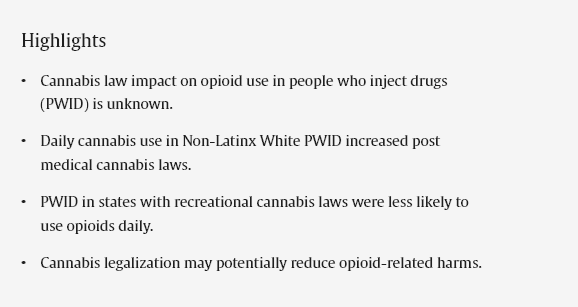
The role of cannabis reform in shaping North America’s overdose and addiction crisis remains hotly contested. People who inject drugs (PWID) sometimes substitute cannabis for opioids. Yet, no research has examined the effects of cannabis legalization on opioid use among PWID– despite major potential for PWID to benefit from policy interventions reducing opioid-related harms. We examined whether legalizing cannabis for medical use (MCL) vs. both MCL and adult/recreational use (MCL+RCL) was associated with changes in substance use among PWID, overall and by sex and race/ethnicity.
-
-
As we reported previously, scientists from the University of New Mexico have been studying how access to marijuana may help alleviate the opioid crisis, declared a national emergency by President Trump. Their study has now been published in the journal PLOS One, with the researchers concluding that there is “clinically and statistically significant evidence” that increased cannabis use led to patients cutting down on opioids and improved their quality of life.
The study analyzed the health data of 66 patients who were using opioids habitually to manage their severe chronic pain. 37 of the patients were enrolled in a medical marijuana program between 2010 and 2015 while 29 patients in the control group were not.
The scientists found that patients using cannabis were 17 times more likely to stop their prescribed opioids and five times more likely to lower their daily dosage of opioids. On average, they cut their doses in half. Comparatively, the patients not enrolled in the medical marijuana program actually increased their opioid usage by more than 10%.
http://bigthink.com/paul-ratner/how-legalizing-marijuana-may-end-the-opioid-crisis