• Cannabis & Hemp - What You Can Do

    Bring Marc Emery Home

    We, the undersigned, petition Mr. Vic Toews, Canada’s Public Safety Minister, to immediately approve Mr. Marc Emery’s application for a treaty transfer from the U.S. to Canada.

    A media figure for marijuana and drug law reform, Mr. Emery is a Canadian citizen who carried out all his activities in Canada. His seed selling business never contracted any US-based employees, and no business was ever conducted on U.S. soil. Yet, when the Canadian government refused to charge or punish him, Mr. Emery was extradited to the United States to be punished under much harsher laws.

    Therefore, we urge that you please grant Mr. Emery’s request for a prison transfer so that he at least may serve out the remainder of his sentence in Canada.

  • Cannabis & Hemp - What You Can Do

    Proposition 19 Money Bomb

    We’re going to make a statement. We’re going to show our movement is strong, and that we can win in November.

    On one day, September 13, the Prop 19 campaign will raise $50,000 — $1,000 for each day left until Election Day, November 2. This couldn’t be more important and timely, so we need everyone to stand up and chip in.

  • Drug Policy

    Cannabis Rx: Cutting Through the Misinformation

    By Dr. Andrew Weil, Founder and director of the Arizona Center for Integrative Medicine
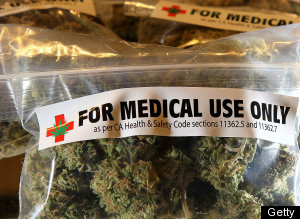
    Rx Cannabis
    If an American doctor of the late 19th century stepped into a time warp and emerged in 2010, he would be shocked by the multitude of pharmaceuticals that today’s physicians use. But as he pondered this array (and wondered, as I do, whether most are really necessary), he would soon notice an equally surprising omission, and exclaim, “Where’s my Cannabis indica?”

    No wonder — the poor fellow would feel nearly helpless without it. In his day, labor pains, asthma, nervous disorders and even colicky babies were treated with a fluid extract of Cannabis indica, also known as “Indian hemp.” (Cannabis is generally seen as having three species — sativa, indica and ruderalis — but crossbreeding is common, especially between sativa and indica.) At least 100 scientific papers published in the 19th century backed up such uses.

    Then the Marihuana Tax Act of 1937 made possession or transfer of Cannabis illegal in the U.S. except for certain medical and industrial uses, which were heavily taxed. The legislation began a long process of making Cannabis use illegal altogether. Many historians have examined this sorry chapter in American legislative history, and the dubious evidence for Cannabis addiction and violent behavior used to secure the bill’s passage. “Under the Influence: The Disinformation Guide to Drugs” by Preston Peet makes a persuasive case that the Act’s real purpose was to quash the hemp industry, making synthetic fibers more valuable for industrialists who owned the patents.

    Meanwhile, as a medical doctor and botanist, my aim has always been to filter out the cultural noise surrounding the genus Cannabis and see it dispassionately: as a plant with bioactivity in human beings that may have therapeutic value. From this perspective, what can it offer us?

  • Drug Policy - International

    Victoria Council Endorses the Vienna Declaration

    Supports Evidence-based Drug Policies

    Former RCMP Chief Superintendent, BC Health Officers Council Also Place Community Health and Safety Above the War on Drugs

    September 9, 2010 [Victoria, Canada] – Victoria City councillors will vote today to ratify their unanimous endorsement of the Vienna Declaration, a recently released document that highlights the failure of the global ‘War on Drugs’ and calls for a transparent review of the effectiveness of current drug policies.

    The City of Victoria voted to endorse the Vienna Declaration at its Governance and Priorities Committee meeting on September 2. With today’s ratification, Victoria will become the second city in Canada to support the Vienna Declaration, which has also been endorsed by Toronto, Ontario and over 17,000 people and organizations.

    “Scientific evidence shows that drug use is a public health issue that cannot be resolved through excessive reliance on law enforcement. We require a balanced and evidence-based approach to effectively deal with the issues surrounding illicit drugs,” said Victoria Coun. and acting Deputy Mayor Philippe Lucas.

    Widespread endorsement of the Vienna Declaration clearly demonstrates to policymakers and lawmakers the growing public support for an alternative to drug prohibition that is based on sound public health and scientific evidence of what works.

  • What You Can Do

    Stop Michele Leonhart

    DEA acting administrator Michele Leonhart is out of control, and it’s time to demand a response from President Obama. Tell the president that he needs to find a DEA administrator who respects patients’ rights and local sovereignty

  • Focus Alerts

    #450 Proposition 19 Could End Mexico’s Drug War

    Date: Sat, 4 Sep 2010
    Subject: #450 Proposition 19 Could End Mexico’s Drug War

    PROPOSITION 19 COULD END MEXICO’S DRUG WAR

    **********************************************************************

    DrugSense FOCUS Alert #450 – Sunday, September 5th, 2010

    Today the Washington Post printed the OPED below which provides a view
    of Proposition 19 from south of the border.

    Your letters to the editor will let the newspaper know you appreciate
    the newspaper’s providing readers with this viewpoint.

    Proposition 19 news clippings may be found at http://mapinc.org/find?272

    The Proposition 19 website is at http://yeson19.com/

  • Cannabis & Hemp - What You Can Do

    Stop the Lies about Marijuana Legalization

    Opponents of California’s Prop. 19 are already ramping up a misinformation campaign to scare voters with wild claims about the dangers of legalizing marijuana for adults 21 and up. Let’s fight back! Sign the petition below to tell the drug war fearmongers that the whole country is watching and their tactics aren’t fooling anybody.

    Shame on Prop. 19 opponents for distorting the facts about ending the failed war on marijuana. Misinformation and scare tactics have no place in the debate about changing California’s marijuana laws.

  • Cannabis & Hemp

    Marijuana Gateway Risk Overblown: Study

    A young woman smokes a joint outside the Vancouver Art Gallery. New research suggests use of marijuana as a teen is not a major factor in using hard drugs later in life.  (Jonathan Hayward)
    Ethnicity, employment better predictors of hard drug use

    Long-held fears that the use of marijuana will lead to harder drugs are overblown, according to new research from the University of New Hampshire.

    The research, in the September issue of the Journal of Health and Social Behavior, found that other factors, such as whether or not a person has a job, or is facing severe stress, are far more predictive of future hard drug use than whether they smoked pot as a teenager.

    “Employment in young adulthood can protect people by closing the marijuana gateway, so over-criminalizing youth marijuana use might create more serious problems if it interferes with later employment opportunities,” said co-author Karen Van Gundy.

  • Drug Policy - Hot Off The 'Net

    The Next Frontier Of Drug Policy Reform

    by Ethan Nadelmann

    Ethan Nadelmann is the founder and executive director of the Drug Policy Alliance.

    For those of us who fought long and hard to reform the notorious 100-to-one crack/powder cocaine disparity in federal law, the Fair Sentencing Act, signed by President Obama on August 3, is at once a historic victory and a major disappointment. It’s both too little, too late and a big step forward.

    The Anti-Drug Abuse Act of 1986, which punished the sale of five grams of crack cocaine the same as 500 grams of powder cocaine, reflected the bipartisan drug war hysteria of the day and was approved with virtually no consideration of scientific evidence or the fiscal and human consequences. The argument for reform has always been twofold: sending someone to federal prison for five years for selling the equivalent of a few sugar packets of cocaine is unreasonably harsh, and it disproportionately affects minorities (almost 80 percent of those sentenced are African-Americans, even though most users and sellers of crack are not black).